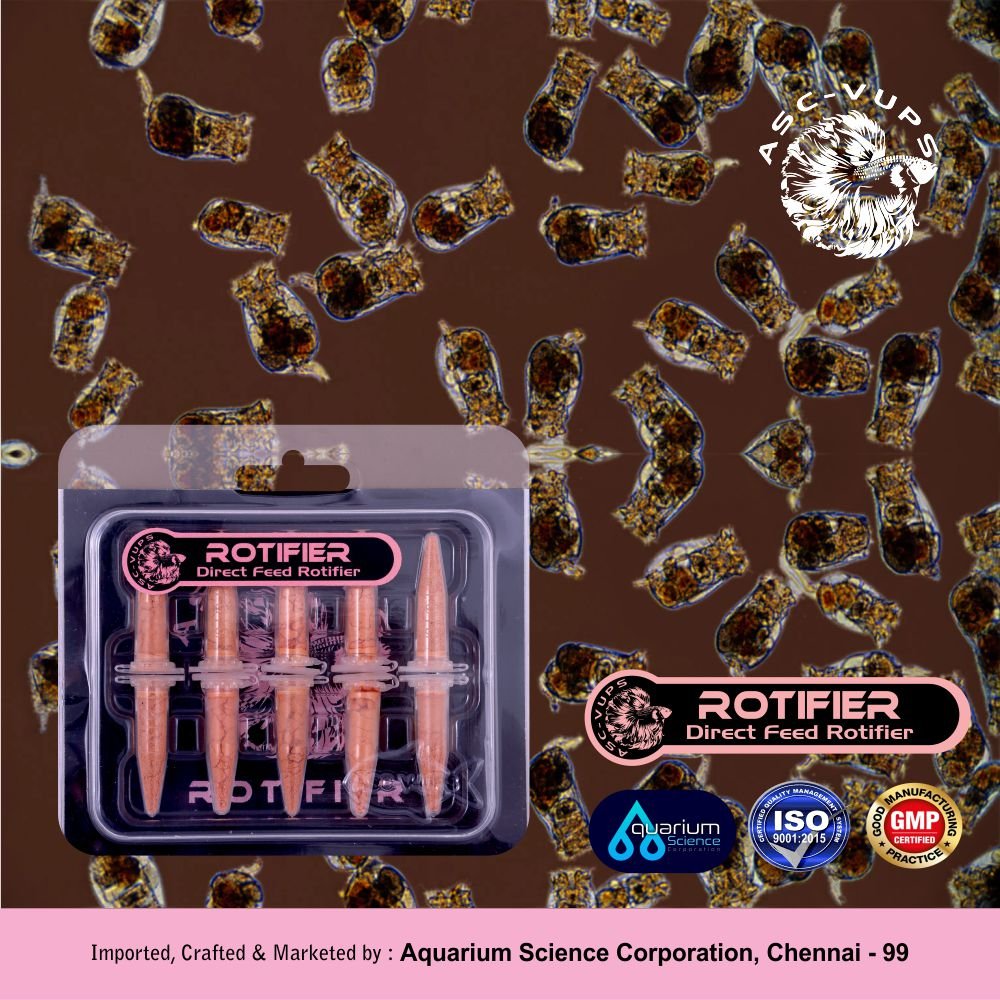
Some fish fry are so small when they hatch that they simply can’t eat standard fry foods. We’re talking about fry that are practically microscopic—marine clownfish larvae, tiny killifish, certain rasboras and gobies. These fry need prey items small enough to fit in mouths measured in fractions of millimeters. Powdered foods? Too large or they don’t recognize them as food. Baby brine shrimp? Still too big for the first few days. This is where rotifers become essential. **What Are Rotifers?** Rotifers are microscopic aquatic animals, typically 100-500 microns in size (about the width of a human hair). They’re live prey that move slowly through the water, triggering hunting responses in even the tiniest fry. The most common species used in aquaculture is *Brachionus plicatilis* (saltwater) and *Brachionus calyciflorus* (freshwater), though several species are commercially available. **Why Fry Need Live Foods** Many fish fry, especially marine species, are programmed to hunt moving prey. They don’t recognize motionless particles as food, no matter how nutritious. Live rotifers provide: – Movement that triggers hunting instinct – Appropriate size for tiny mouths – Complete nutrition in digestible form – Continuous availability (they stay alive in tank water) **Who Absolutely Needs Rotifers?** **Marine fish breeders** working with clownfish, gobies, blennies, dottybacks, and other popular marine species cannot successfully raise fry without rotifers or similar live foods. **Killifish breeders** raising annual species with tiny fry need rotifers for the first week of feeding. **Difficult freshwater species** like certain rasboras, tiny tetras, and dwarf species benefit from rotifer feeding during early development. **Research and aquaculture facilities** use rotifers as standard first food for almost all fish larvae. **Choosing Rotifer Products** **Live cultures:** You maintain actively reproducing rotifer populations. Requires ongoing care and feeding but provides unlimited supply. **Concentrated live:** Shipped in concentrated suspension, ready to use immediately. Lasts several days under refrigeration. **Eggs (resting cysts):** Some rotifer species produce resting eggs that can be hatched on demand. Convenient but not all species produce viable cysts. **Enriched vs. non-enriched:** Rotifers are what they eat. Enriched rotifers have been fed nutritious algae or commercial enrichment products, making them more nutritious for fry. **Starting a Rotifer Culture** If you’re breeding fish that need rotifers regularly, maintaining your own culture is most economical: **Container:** 1-5 gallon food-grade containers work well. Larger volumes = more stable cultures. **Water:** Marine rotifers need saltwater (25-30 ppt). Freshwater species need conditioned freshwater. **Aeration:** Gentle air stone provides oxygen and keeps rotifers suspended. **Food:** Rotifers eat phytoplankton, yeast-based rotifer food, or commercial rotifer diet. Feed daily. **Temperature:** Most species thrive at 70-75°F. Warmer = faster reproduction but shorter lifespan. **Light:** Gentle lighting supports phytoplankton if you’re using live algae to feed rotifers. **Maintenance:** Harvest 30-50% daily for fry feeding, replace with fresh water/culture medium. **Harvesting and Feeding Rotifers** Use fine mesh net (50-100 micron) or siphon to collect rotifers. Strain through mesh to concentrate them. Rinse collected rotifers with fresh water (appropriate salinity for your fry tank) to remove culture water. Add directly to fry tank. Feed multiple times daily—rotifers don’t last forever in tank water, especially if conditions differ from culture. Estimate density: a well-maintained culture produces millions of rotifers per liter. You typically need thousands per day for even a small batch of fry. **Enriching Rotifers** Rotifers are nutritionally incomplete unless enriched. They’re like empty vessels—nutritious only if they’ve eaten nutritious food recently. **Enrichment process:** 1. Collect rotifers 12-24 hours before feeding to fry 2. Place in clean container with algae paste, Selco, or commercial enrichment product 3. Provide heavy aeration 4. After 12-24 hours, harvest and feed to fry Enriched rotifers provide essential…