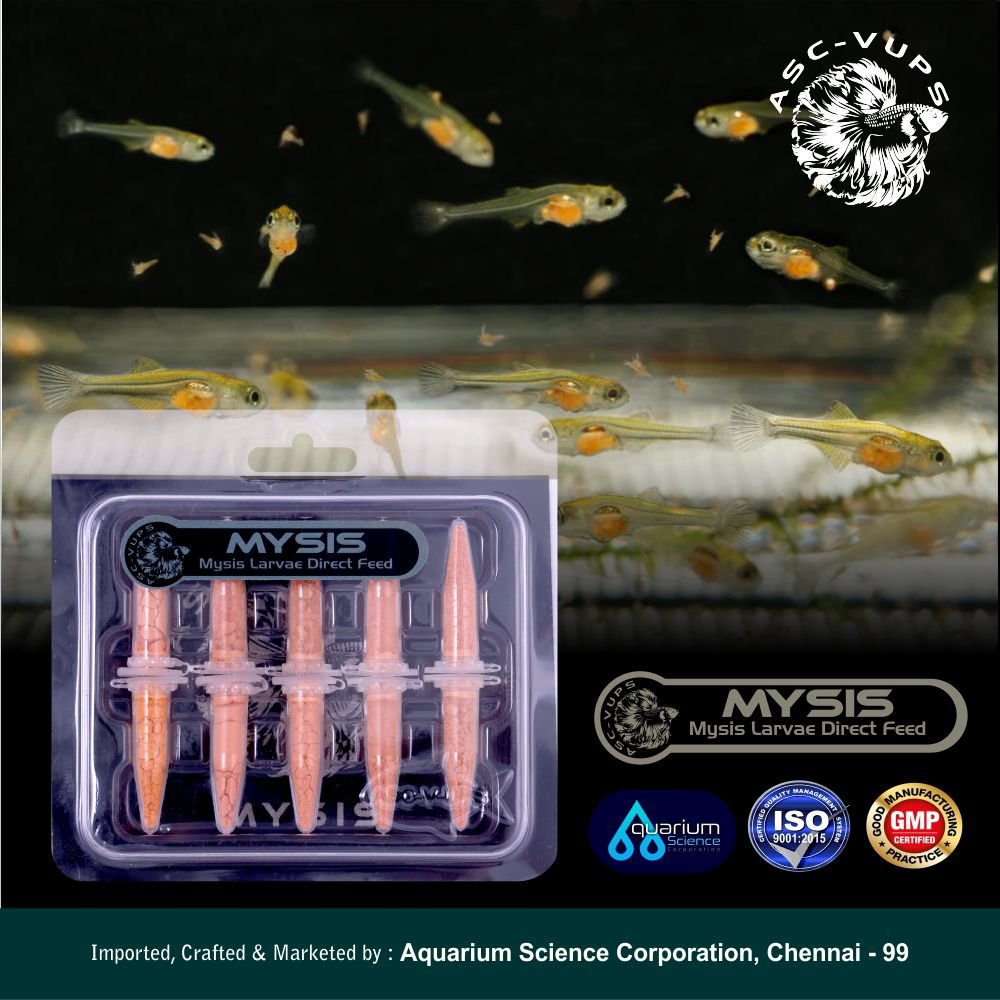
Walk up to almost any aquarium and offer fish a choice between their regular pellets and frozen mysis shrimp. Watch the feeding frenzy that ensues when the mysis hits the water. Even fish that were \”full\” suddenly have room for more. There’s something about mysis shrimp that drives fish absolutely wild. It’s not just palatability—mysis are nutritional powerhouses that support health, growth, and coloration in ways that processed foods can’t match. **What Are Mysis Shrimp?** Mysis (scientific name *Mysis relicta* and related species) are small freshwater crustaceans, typically 1-2 cm long. Despite being called \”shrimp,\” they’re actually a different order (Mysida). In the wild, they’re a primary food source for many freshwater and marine fish. They’re rich in protein, contain essential fatty acids, and have an ideal nutritional profile for aquarium fish. **Why Fish Love Mysis** **Natural prey instinct:** Fish are programmed to recognize and hunt shrimp-like organisms. Mysis trigger this instinct intensely. **Movement in water:** Even frozen mysis retain shape and movement when thawed, stimulating hunting behavior. **Taste and aroma:** Unlike pellets, mysis have natural flavors and scents that fish find irresistible. **Texture:** The crunchy exoskeleton provides satisfaction that soft pellets lack. **Who Benefits from Mysis?** **Saltwater fish** of almost every type thrive on mysis. From finicky anthias to aggressive triggers, most marine fish eagerly accept mysis. **Discus and angelfish** show enhanced coloration and breeding condition when regularly fed mysis. **Predatory fish** like oscars, arowanas (when appropriately sized), and large cichlids benefit from whole-prey nutrition. **Picky eaters** that refuse pellets often can’t resist mysis. It’s the gateway food that gets stubborn fish eating. **Fish in breeding condition** need rich nutrition to produce quality eggs and milt. Mysis provides this reliably. **Fry and juveniles** (large enough to consume them) grow faster on mysis than on dry foods alone. **Nutritional Profile** Mysis provide: – High protein (60-70% dry weight) – Essential amino acids – Omega-3 and omega-6 fatty acids (especially EPA and DHA) – Astaxanthin and other carotenoids (color enhancement) – Vitamins and minerals – Digestible chitin (promotes gut health) This complete nutrition profile makes mysis closer to wild diet than any processed food can achieve. **Fresh vs. Frozen** **Live mysis** are ideal but rarely available to hobbyists. They’re expensive and difficult to source. **Frozen mysis** are the practical choice. Flash-frozen at harvest, they retain most nutritional value and are readily available at fish stores. **Freeze-dried mysis** exist but lose considerable nutritional value during processing. Frozen is superior. **How to Feed Mysis Properly** **Thaw before feeding:** Never dump frozen food directly into tanks. Thaw in a cup of tank water first. **Rinse if desired:** Some aquarists rinse to remove excess phosphates from packing liquid. This is optional for most setups. **Target feed:** Use feeding tongs or turkey baster to deliver mysis directly to shy fish or those that need special attention. **Feed appropriate portions:** Mysis are rich. A little goes a long way. One small cube for a 20-gallon community tank is plenty. **Frequency:** 2-4 times weekly provides variety without making fish dependent on rich foods. **Observe feeding:** Watch to ensure all fish get some. Dominant fish might hog mysis while shy ones get nothing. **Enhancing Color with Mysis** The astaxanthin and other carotenoids in mysis intensify red, orange, and yellow pigmentation in fish. For show fish or when color is priority, increase mysis feeding to 4-5 times weekly for 4-6 weeks before shows or photos. Combined with other color-enhancing foods like spirulina, the results can be dramatic. **Conditioning Breeding Pairs** When preparing fish for breeding, mysis is essential: Feed daily for 2-3 weeks before anticipated spawning. The high-protein, high-fat diet…