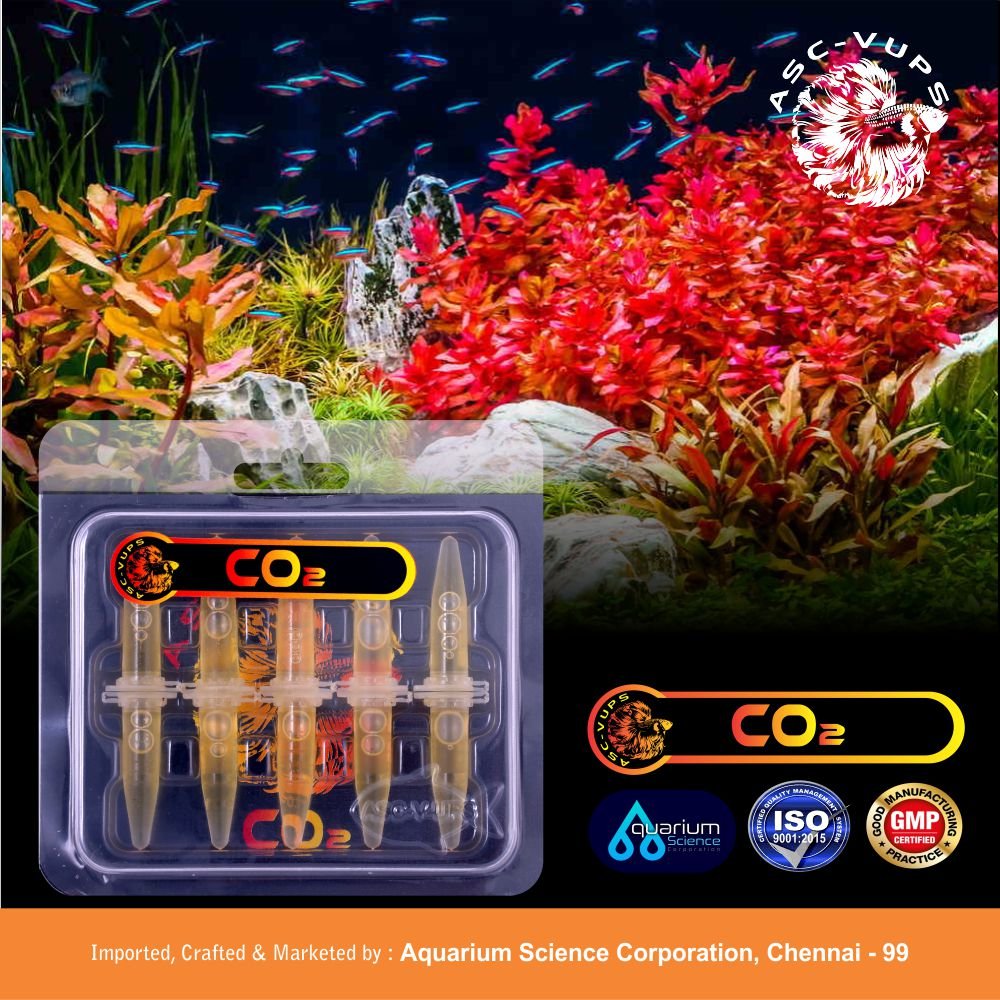
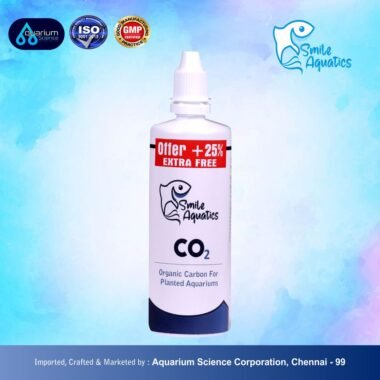
You want lush, healthy aquarium plants. You’ve researched planted tanks and keep seeing the same advice: \”You need CO₂ injection.\” But the thought of pressurized CO₂ systems—tanks, regulators, diffusers, bubble counters, the cost, the complexity—is overwhelming. What if there was a simpler way to provide carbon to your plants without the full pressurized setup? That’s where liquid carbon supplements like CO₂ come in. **Understanding Plant Carbon Needs** Plants need three macronutrients: nitrogen, phosphorus, and potassium (NPK). But they also need carbon—in fact, carbon makes up about 50% of a plant’s dry weight. In nature, plants get carbon from atmospheric CO₂ that dissolves into water. In aquariums, this natural dissolution is limited, especially in well-aerated tanks where gas exchange removes CO₂ as fast as it enters. For low-tech planted tanks, ambient CO₂ might be sufficient. For medium to high-light setups with demanding plants, supplemental carbon becomes necessary for optimal growth. **What Is Liquid CO₂?** Liquid carbon supplements (often called \”liquid CO₂\” though that’s technically a misnomer) contain glutaraldehyde or similar organic carbon compounds that plants can use as a carbon source. It’s not actual dissolved CO₂ gas—it’s a carbon-containing liquid that provides bioavailable carbon when added to aquarium water. **How Does It Work?** Plants absorb the liquid carbon supplement through their leaves and convert it into usable carbon for photosynthesis and growth. Additionally, glutaraldehyde has mild algaecidal properties, helping control algae while feeding plants—a dual benefit. **Who Benefits from Liquid CO₂?** **Low-tech planted tank keepers** who want better plant growth without pressurized systems find liquid CO₂ a practical middle ground. **Beginners** exploring planted tanks before investing in expensive CO₂ systems can test the waters with liquid supplements. **Aquascapers on a budget** get improved plant growth and health at a fraction of pressurized CO₂ costs. **Algae battlers** benefit from the mild algaecidal effects that help tip the balance toward plants over algae. **Transitioning between setups**—when moving from high-tech to low-tech or vice versa—liquid CO₂ bridges the gap. **Dosing Liquid CO₂** **Daily dosing:** Most products recommend daily addition based on tank volume. Typical dose: 1ml per 10 gallons (adjust per product instructions). **After water changes:** Dose fully for total tank volume after water changes to compensate for dilution. **Gradual introduction:** Start at half-dose for the first week, especially if fish or inverts seem sensitive. **Consistency matters:** Daily dosing provides steady carbon availability. Skipping days reduces effectiveness. **Application method:** Add directly to water flow (near filter output) for even distribution. **Realistic Expectations** Liquid CO₂ isn’t equivalent to pressurized CO₂ injection. It provides supplemental carbon that helps plants but won’t match the growth rates of high-tech systems. **What liquid CO₂ can do:** – Improve growth rates of easy to moderate plants – Enhance plant coloration – Support better overall plant health – Help control certain algae types – Provide affordable entry to carbon supplementation **What it cannot do:** – Match pressurized CO₂ growth rates – Support the most demanding carpet plants alone – Eliminate all algae (no product does) – Compensate for poor lighting or fertilization **Compatibility Considerations** **Fish:** Most fish tolerate liquid CO₂ well at recommended doses. Sensitive species might need reduced dosing. **Shrimp:** Some shrimp (especially sulawesi shrimp) can be sensitive. Start with half-dose and monitor. **Snails:** Generally tolerate well. **Plants:** Most plants benefit. Some delicate moss species might be sensitive at full dose. **Beneficial bacteria:** At recommended doses, doesn’t harm filter bacteria. Massive overdoses could affect cycling. **Algae Control Benefits** Liquid CO₂’s mild algaecidal properties help control: – Green spot algae – Staghorn algae – Black beard algae (BBA) – Hair algae **Spot treatment:** Some aquarists use undiluted liquid CO₂ directly on…