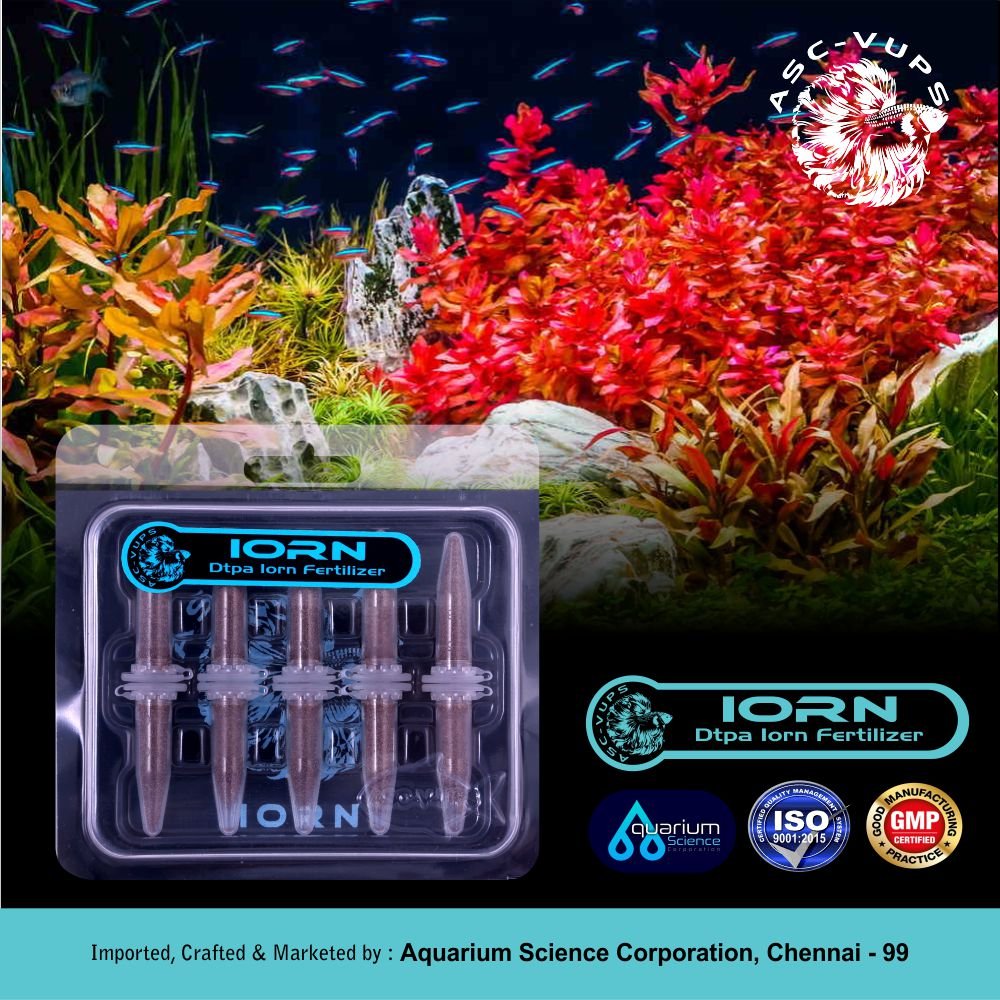
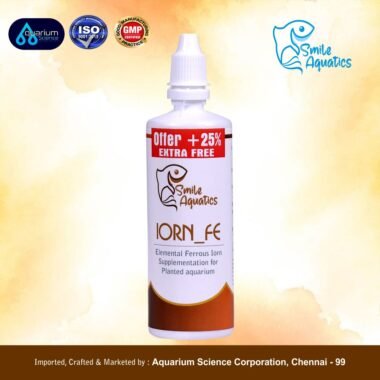
You’ve set up your planted tank. Your green plants are growing well, but those beautiful red plants you bought—the red ludwigia, the rotala macrandra, the alternanthera reineckii—they’re staying stubbornly green or pale pink. You’ve checked your lighting, your CO₂ is good, but something’s missing. That something is probably iron. Iron is the micronutrient most commonly limiting red pigment development in aquarium plants. Without adequate iron, even genetically red plants remain green or show washed-out colors. Iron Fe provides the targeted iron supplementation your red plants need to achieve their full potential. **Why Plants Need Iron** Iron is essential for chlorophyll synthesis and photosynthesis. All plants need it, but red plants need extra because they produce anthocyanin pigments (red/purple colors) that require additional iron for proper synthesis. Symptoms of iron deficiency: – New leaves yellow while veins stay green (interveinal chlorosis) – Red plants staying green or pale – Slow growth despite good conditions – Overall poor plant health **Understanding Plant-Available Iron** Not all iron is equally available to plants. Iron exists in two forms: – **Ferric iron (Fe3+):** Oxidized form, poorly absorbed by plants – **Ferrous iron (Fe2+):** Reduced form, readily absorbed Quality iron supplements like Iron Fe use chelated iron—iron bound to organic molecules that keep it in plant-available form longer in aquarium water. **Who Needs Iron Fe?** **Red plant enthusiasts** growing species like rotala, ludwigia, alternanthera, and other red-pigmented plants. **High-light planted tanks** where plant growth rates are high and nutrient demand is elevated. **Aquascapers** creating color contrast in layouts using red plants as focal points. **Planted tanks with new substrates** that haven’t accumulated iron from fish waste and food over time. **Anyone seeing yellow new growth** indicating iron deficiency. **Dosing Iron Fe** **Frequency:** 2-3 times weekly, or daily in high-tech tanks with fast plant growth. **Amount:** Follow product directions (typically 1ml per 10-20 gallons, adjusted for plant mass and growth rate). **Timing:** Dose when lights are on so plants can immediately utilize the iron during photosynthesis. **After water changes:** Dose fully to replace iron removed by water change. **Application:** Add directly to water column near plants or pour near filter output for distribution. **The Red Plant Challenge** Getting red plants to show vibrant coloration requires multiple factors working together: **High light (2+ watts per gallon or high PAR):** Red pigment production is light-driven **Adequate CO₂:** Supports overall plant growth and metabolism **Iron supplementation:** Provides raw material for red pigment synthesis **Other nutrients:** Complete fertilization (nitrates, phosphates, micros) **Stability:** Consistent conditions without wild swings Iron Fe addresses one critical piece, but all factors must be present for brilliant reds. **Chelated Iron vs. Unchelated** **Chelated iron (EDTA, DTPA, gluconate):** – Stays plant-available longer – Doesn’t precipitate quickly – More expensive but more effective – Recommended for most aquariums **Unchelated iron:** – Rapidly oxidizes to unavailable form – Precipitates out of solution – Cheaper but largely wasted – Not recommended for planted tanks Iron Fe uses chelated iron for maximum effectiveness. **Combining with Complete Fertilizers** Iron works best as part of comprehensive nutrition: **Macronutrients (Macronix):** Nitrogen, Phosphorus, Potassium **Micronutrients (MICRONIX):** Trace elements beyond iron **Iron Fe:** Targeted iron supplementation **Carbon source:** CO₂ or liquid carbon Many aquarists use complete micro fertilizers that include iron, then add extra Iron Fe for red plants needing more than the complete fertilizer provides. **Water Chemistry Impact** **pH affects iron availability:** Lower pH (6.0-7.0) keeps iron available longer. Higher pH causes faster precipitation. **Phosphates can bind iron:** Very high phosphate levels can reduce iron availability. Keep phosphates moderate (5-10 ppm). **Oxygenation oxidizes iron:** Well-oxygenated water converts available iron to unavailable forms faster. This is normal—just…